
At Humlab Global, we are dedicated to deepening the understanding of human aging through the development of next-generation humanized mouse models. By engrafting functional human immune systems alongside a broad spectrum of human tissues, our platform enables the study of uniquely human biology in ways traditional preclinical systems cannot.
As human tissues age, they undergo profound molecular and cellular shifts, accompanied by dynamic changes in immune function. These processes influence disease susceptibility, progression, and therapeutic response. Our platform is designed to uncover the pathways and mechanisms driving these aging-related changes—and to investigate whether key aging-associated phenotypes can be modulated or reversed.
Technology Platform
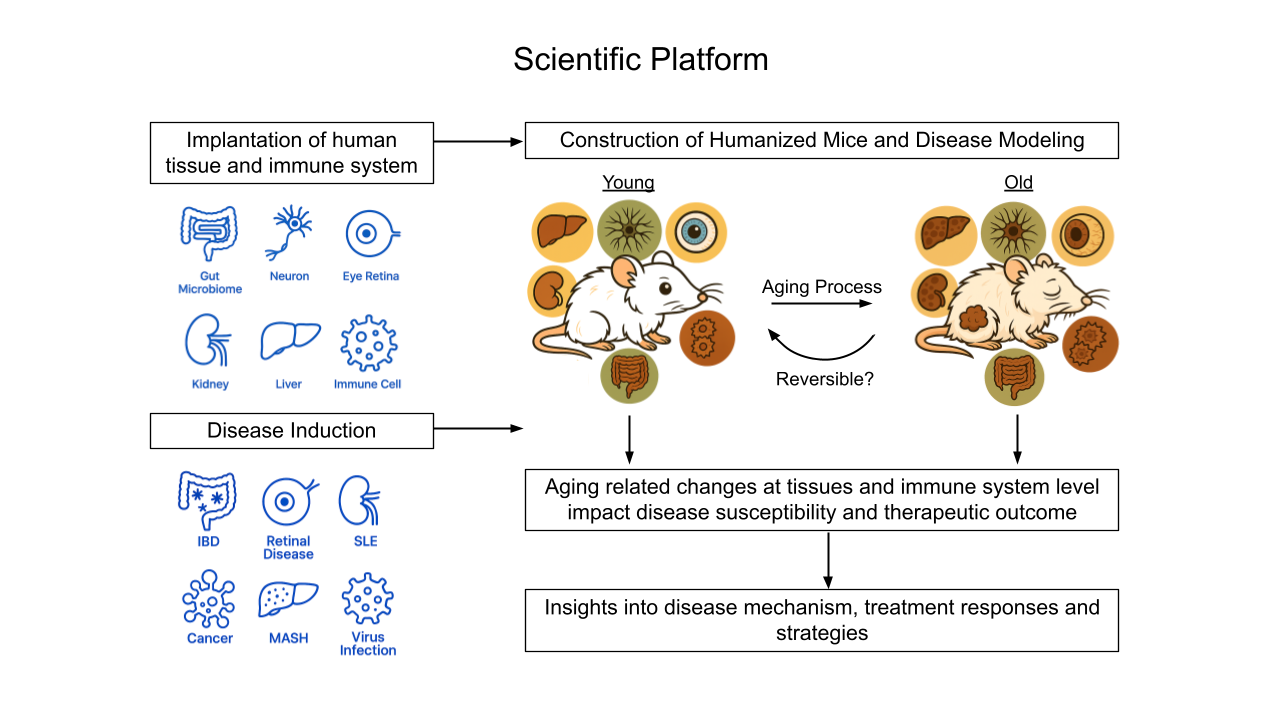
We integrate a diverse array of human tissues into our models, including gut microbiome, neuronal and retinal cells, liver hepatocytes, kidney cells and essential components of the human immune system. This comprehensive system allows us to examine how aging-driven molecular, cellular, and transcriptomic changes influence human disease biology and treatment outcomes.
To recreate human-relevant disease states, we introduce defined perturbations that mimic conditions such as inflammatory bowel disease (IBD), retinal degeneration, systemic lupus erythematosus (SLE), cancer, metabolic dysfunction–associated steatohepatitis (MASH), and viral infections. These models allow direct observation of human-specific responses across tissues and immune compartments, enabling mechanistic insight into disease initiation, progression, and therapeutic modulation.
By uniting human tissues, human immunology, and disease-relevant perturbations into one integrated system, our platform offers a powerful foundation for identifying disease drivers, characterizing age-dependent biological processes and evaluating new therapeutic strategies in a human-relevant context. Our approach bridges critical gaps between early discovery and clinical translation, helping de-risk therapeutic development and refine scientific hypotheses.